
Kitchen Renovation Cost Guide Melbourne (2026)
Last updated: September 2026 · Melbourne/Victoria guidance
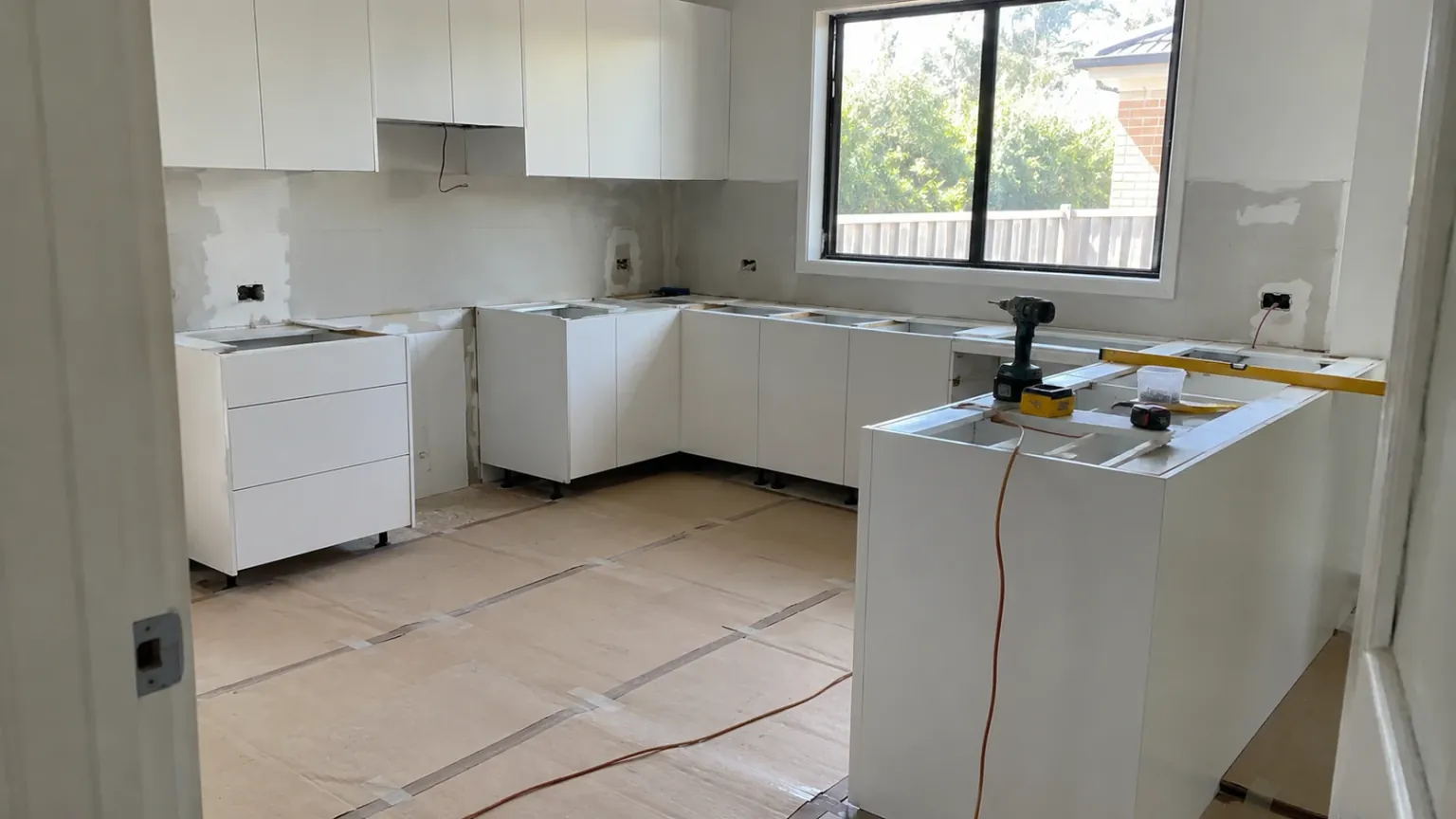
A kitchen is often the room that changes daily life in a Melbourne home the most — but "how much does it cost?" almost always gets the same frustrating answer: it depends. This guide replaces that with real 2026 ranges, an honest breakdown of where each dollar goes, and the choices that move the price up or down.
The figures below reflect what western and southeastern Melbourne homeowners are actually paying, from Tarneit and Point Cook new-estate kitchens to full strip-outs in established Werribee and Hoppers Crossing homes.
Kitchen renovation cost by scope
Most Melbourne kitchen renovations fall into three tiers. Where you land depends less on the size of the room and more on whether you're keeping the existing layout or changing it.
- Cabinet & benchtop refresh — $15,000 to $25,000. New doors, benchtop and splashback over the existing footprint. Best value if the layout already works.
- Full kitchen renovation — $25,000 to $45,000. Complete strip-out, new cabinetry, new benchtop, new appliances and finishes.
- Premium open-plan redesign — $45,000 to $80,000+. Removing walls, an island bench, butler's pantry and high-end fixtures.
Where the money actually goes
Understanding the split helps you decide where to spend and where to save. On a typical full renovation, cabinetry and benchtops together are usually the single largest line item, followed by labour and trades.
- Cabinetry — the biggest variable. Flat-pack is cheapest, custom joinery costs more but fits awkward spaces and lasts longer.
- Benchtops — laminate is the budget option; timber, porcelain and natural stone cost more. We'll confirm which compliant products suit your budget at quote stage.
- Appliances — you control this entirely, from mid-range to premium European brands.
- Trades & labour — electrical, plumbing, tiling, plastering and project management.
- Structural work — removing a wall for open-plan living adds cost and may need a permit and engineering.
What pushes the price up
- Moving plumbing or the sink to a new location.
- Removing load-bearing walls (engineering + permit).
- Premium benchtops with waterfall ends and full-height splashbacks.
- Custom joinery, integrated appliances and soft-close everything.
- Older homes: asbestos checks and rectifying hidden damage found at demolition.
How to save without cutting corners
- Keep the existing layout — plumbing and gas stay put, which saves thousands.
- Choose a benchtop in a standard thickness and edge profile — waterfall ends and thick edges add fabrication cost.
- Lock in every selection before work starts to avoid costly mid-project changes.
- Get an itemised fixed-price quote so you can see exactly what each upgrade adds.
A note on engineered stone
Since 1 July 2024, the manufacture, supply, processing and installation of engineered stone benchtops, panels and slabs has been prohibited in Australia. Some products are excluded from the ban, and there are separate rules for working on engineered stone that is already installed.
If you're comparing benchtop quotes, ask for the exact product name and its supplier documentation so you can check it is permitted. WorkSafe Victoria explains how to identify engineered stone from a product's safety data sheet.
Do you need a permit?
Most cosmetic kitchen work — new cabinets, benchtops, splashbacks and like-for-like appliance swaps — does not need a building permit. Removing walls, relocating plumbing or significant electrical work can. Requirements vary between councils, so confirm with a registered building surveyor before you commit. Our permit guide covers this in detail.
Key takeaways
- Budget $15k–$25k for a refresh, $25k–$45k for a full renovation, and $45k+ for open-plan.
- Cabinetry and benchtops are the biggest cost drivers — this is where your choices matter most.
- New engineered stone benchtops have been banned in Australia since 1 July 2024 — ask for product documentation.
- Keeping the existing layout is the single biggest way to control cost.
- Always get an itemised, fixed-price quote so upgrades are transparent.
Official sources
Keep reading
This guide is general information for Melbourne homeowners, not legal or financial advice. Costs are indicative and vary by project. Always confirm permit and compliance requirements with your council, a registered building surveyor, or the Building and Plumbing Commission before starting work.